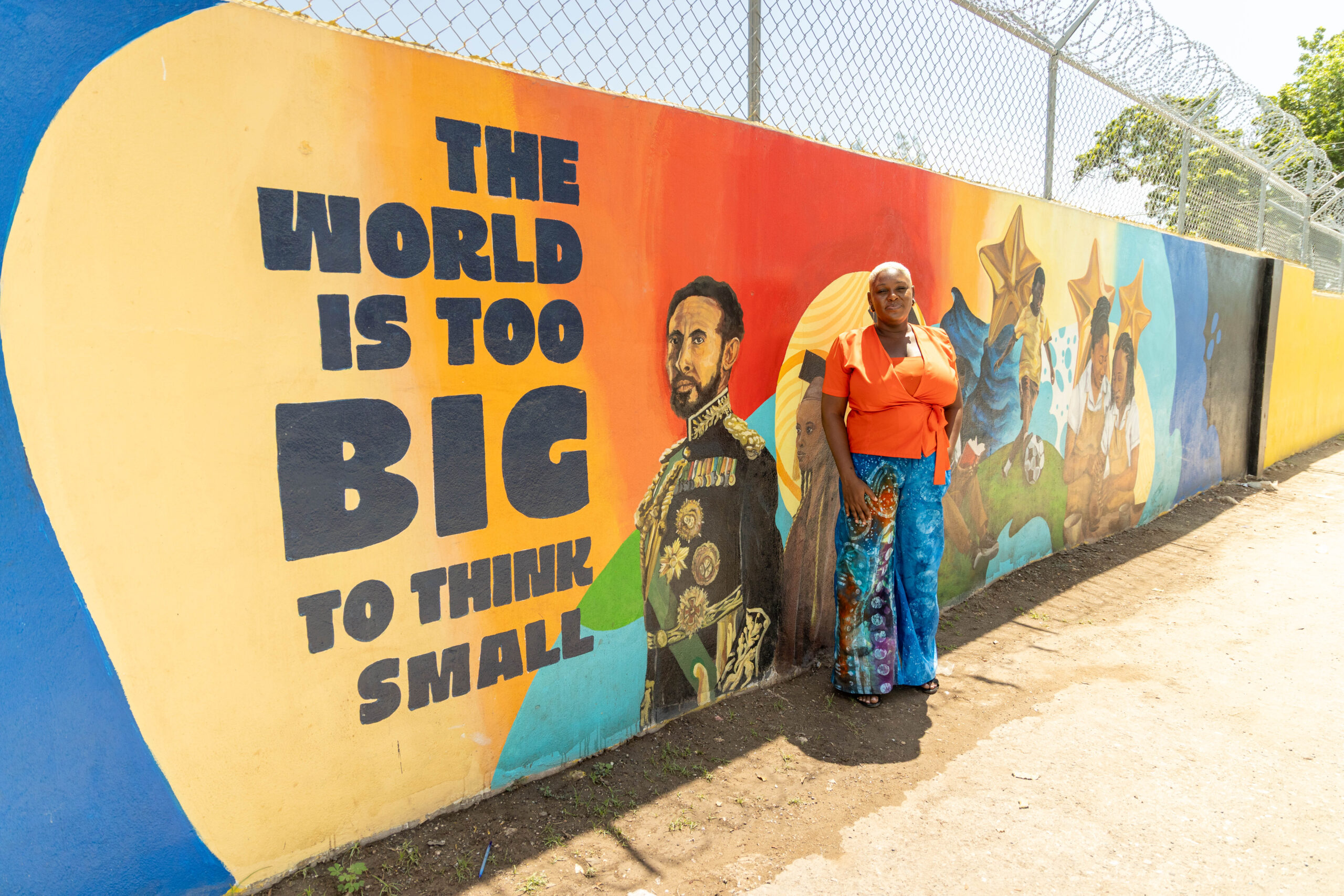
Educator Latanya Lakeman finds it hard to pinpoint what she found most valuable about the Dispute Resolution Training she and her 49 coworkers attended as part of the EU BRIDGE Project, in June of this year (2025).
When queried, the 35-year-old teacher of five-year-olds at the National Baptist Basic School in Trench Town, explains:
“Well, to be honest, ALL the information was ‘most valuable’, because we were in need of the training. We were glad, actually – we were all excited about it, because many of us have issues, especially when it comes to conflict resolution. All categories of our staff attended, the Principal, 24 teachers, and ancillary staff.
“And we later performed a role play similar to the one at our training for our parents at our school’s Parents’ Day – they were very receptive.”
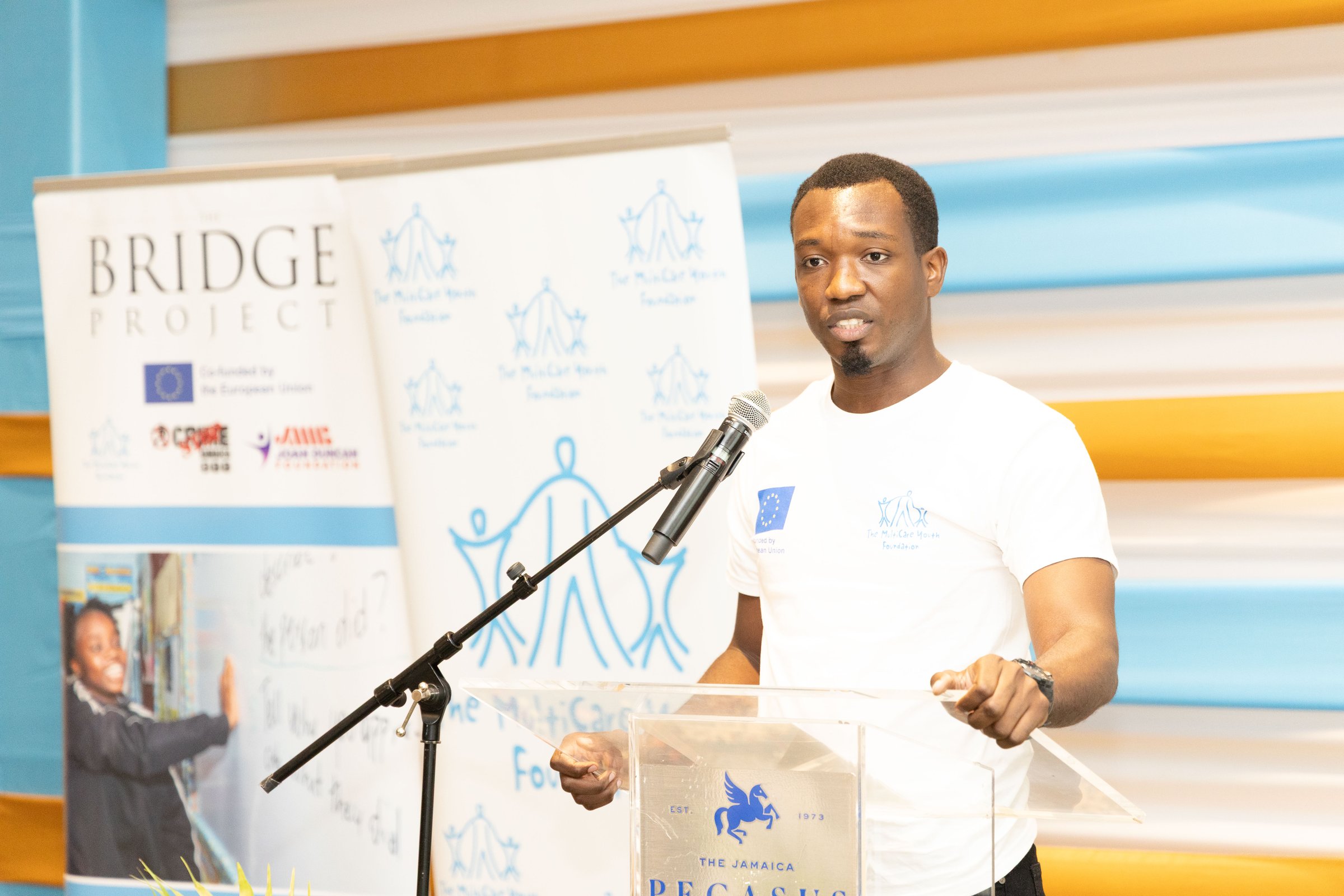
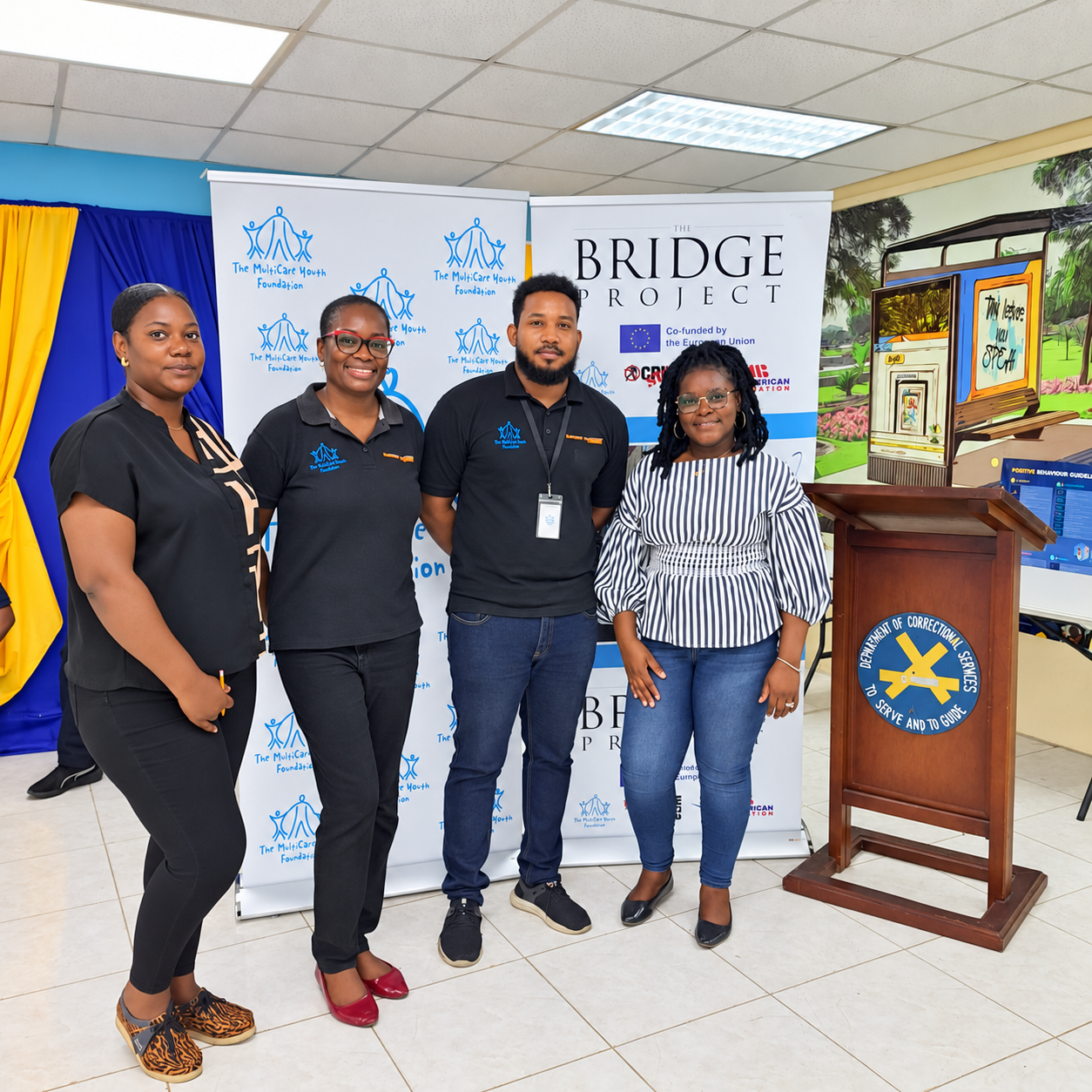
Trench Town, which strives to counteract a reputation as a ‘volatile neighbourhood’, was one of six such communities in four parishes across the island, which benefited from a dynamic mix of layered interventions over a three year period under the EU BRIDGE Project. Funded by the European Union, it was executed by The MultiCare Youth Foundation (MYF), the philanthropic arm of the ICD Group, and its partners. The Programme’s acronym explains its critical objectives of Building through Reintegration, Intervention, Development, Growth and Education.
The intervention at Trench Town featured two full days of instruction in the School’s main hall. Mrs. Lakeman, whose little pupils know her as “Aunty Lottie”, further reports:
“We learned about different types of communication, how not working together affects us as a team, and the fact that if we are having a dispute, even if we don’t tell others about it, it shows in our face and our demeanor. The presenters spoke about how to mediate and demonstrated through role play.
“What we found most interesting was when we had to do role play, for example showing where we were not resolving a conflict the correct way, and playing the part of a mediator assisting both sides to come to (an amicable) conclusion. The role play was both interactive and educational.”
Regarding the role of the mediator, Mrs. Lakeman shares that she was surprised to find she had misunderstood this, explaining:
“I originally thought that if I was the mediator I was to listen to both sides and come up with a solution. But I learned that the mediator’s responsibility is really to listen to both sides and to encourage and facilitate the parties to work together to solve the conflict themselves!”
Mrs. Lakeman, who has been teaching at the National Baptist Basic School for eleven years, believes that the Dispute Resolution Training has had a very positive impact, among her coworkers, and among the young parents of their 259, two to five-year-old pupils especially. Even more significant, she feels, is the fact that the training took place in time to modify the type of conflicts that usually arise before a national election – that is, less than three months before Jamaica’s September 3, 2025 General Election. She reports:
“I have seen things, situations in which political discussions have been dealt with in a very peaceful way, contrary to what usually happens. I think the training was also very beneficial because the lessons about how to communicate in a different (more positive) way is reaching young people who need this, as those trained go home and people see how they react at home.
Asked whether she benefitted personally from the Dispute Resolution Training, Latanya Lakeman explains:
“Well, I’m not really a violent person, so I didn’t need the conflict resolution (training) personally, I had already learned to ‘walk away’. But the training was very beneficial for the community, especially the young people. They can learn how to communicate in a different way – many do not know how, they prefer to fight or quarrel.”